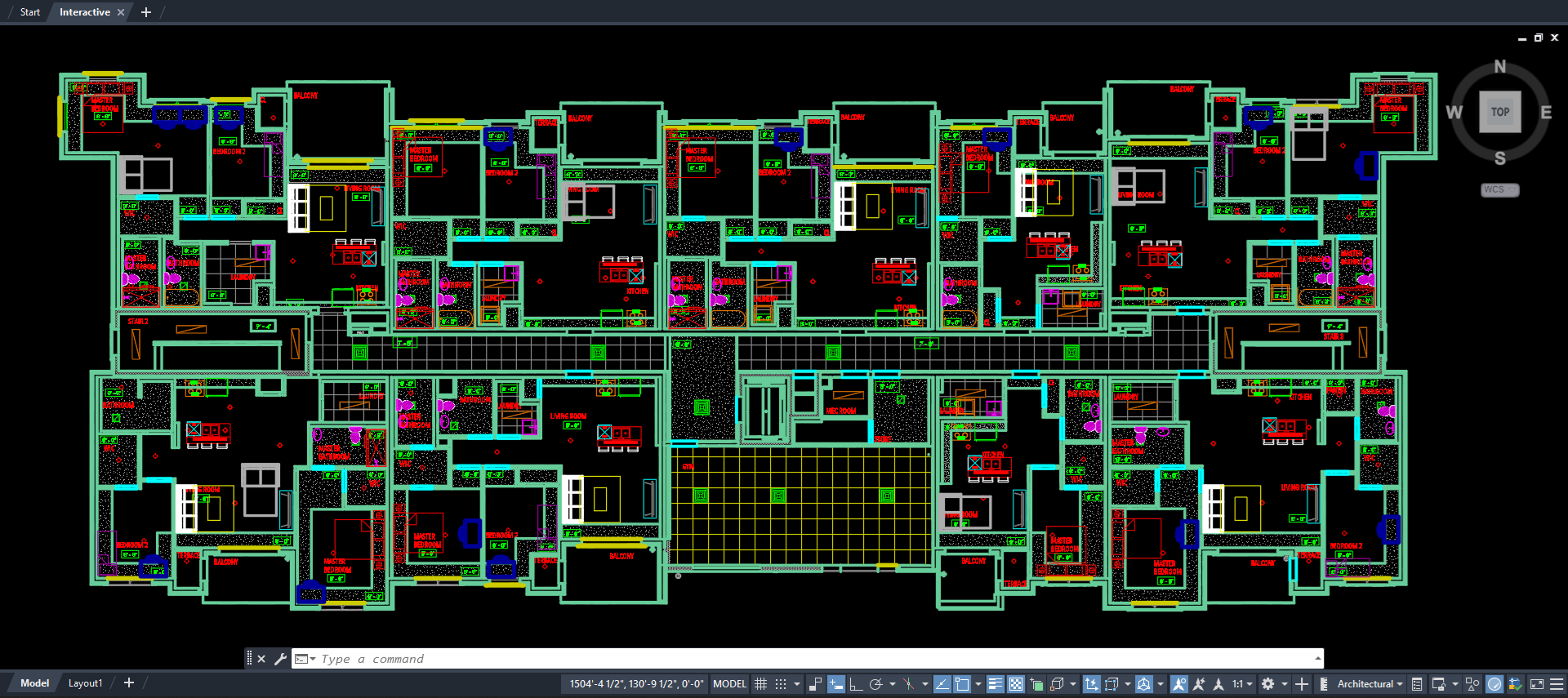
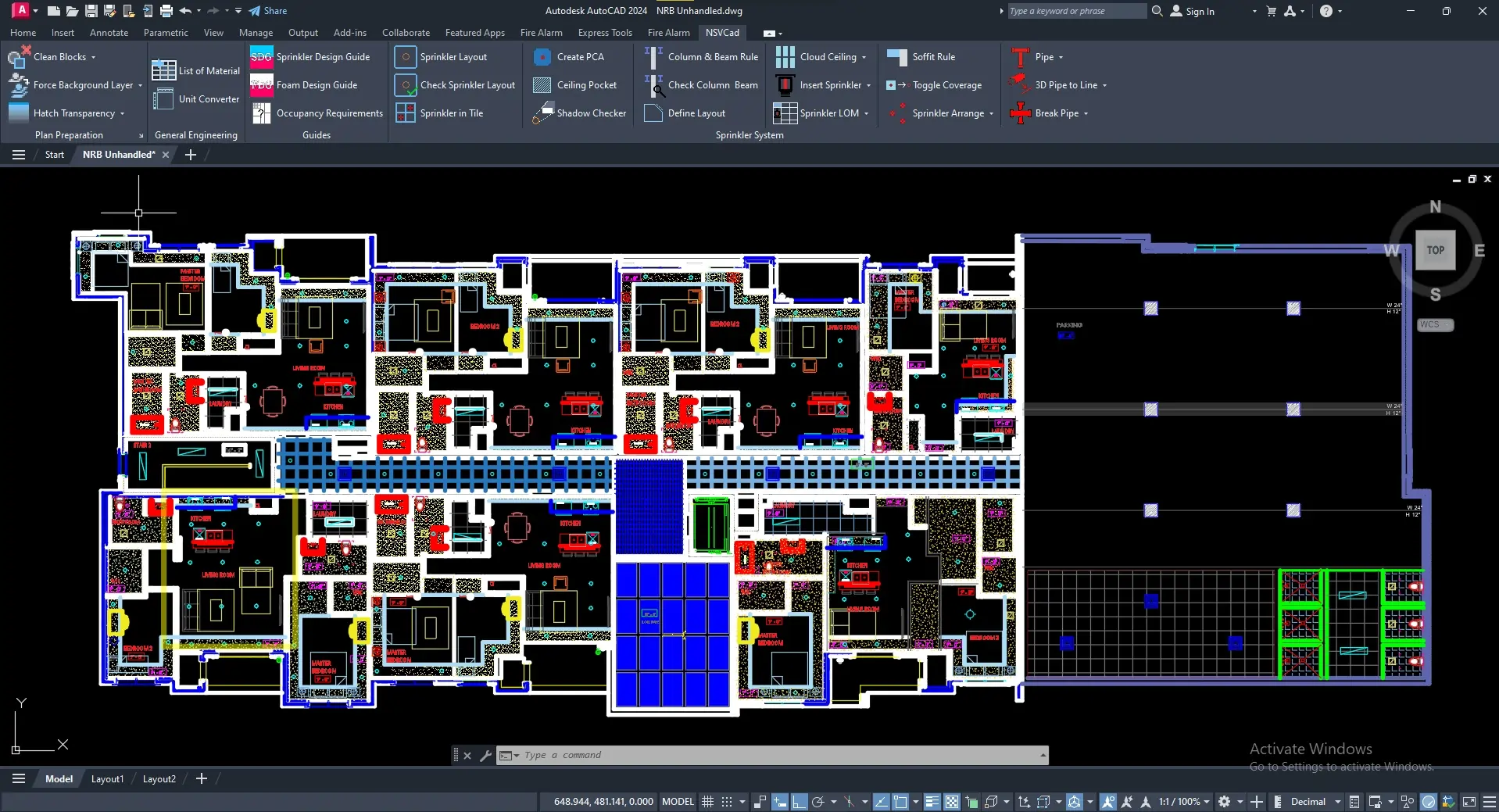
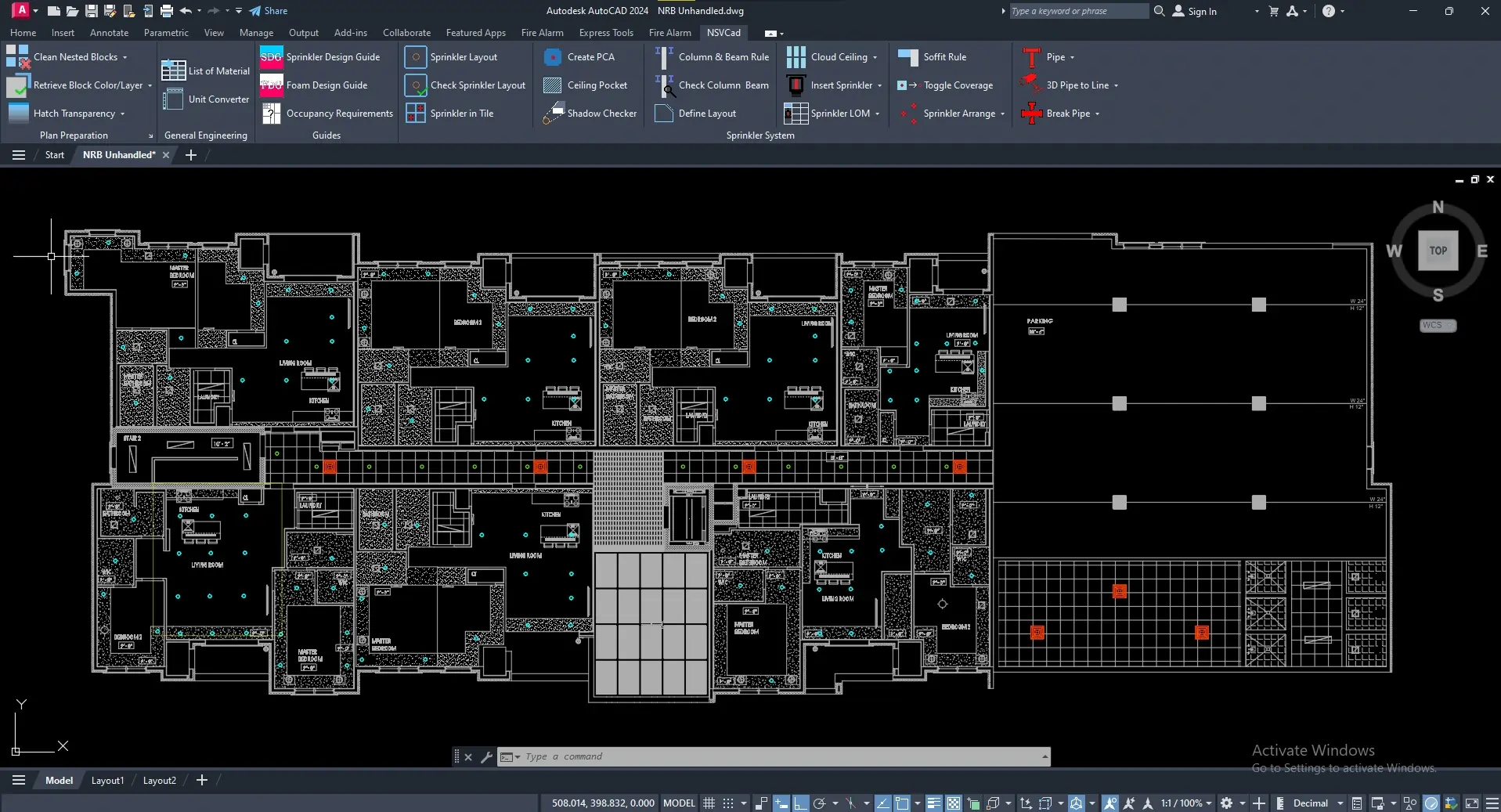
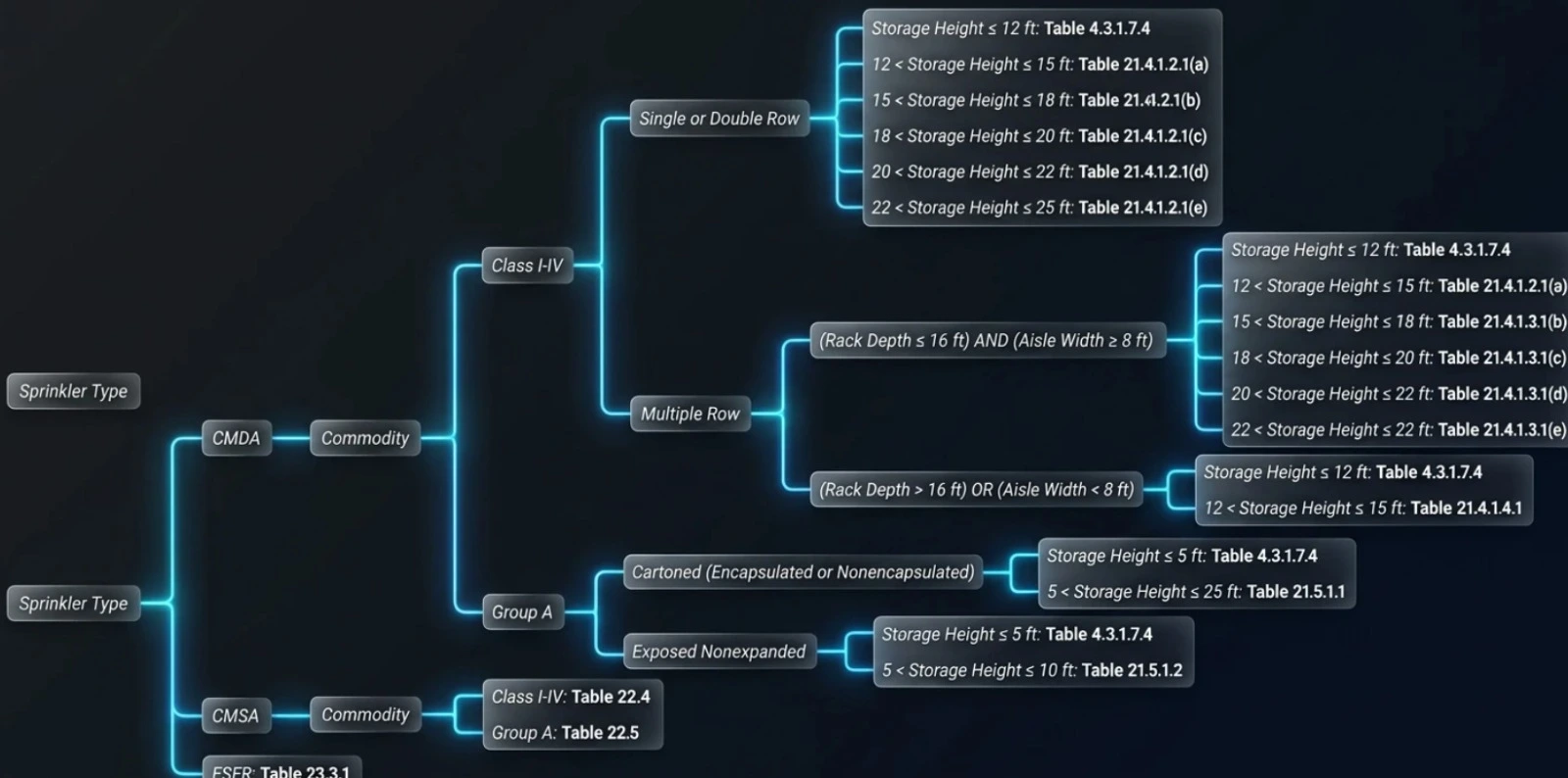
The definitive tool to engineer fire safety for modern buildings. Automate hydraulic calculations and design sprinkler systems without limits, ensuring ultimate precision.
Watch how our designing tools transform your design workflow into a fast and enjoyable experience. Plugged into AutoCAD. Easy to use.
Smart tools that automate repetitive drawing cleanup tasks and streamline plan preparation.
Intelligent sprinkler design tools for fast, code-compliant layout.
Efficient tools for pipe drawing, pipe sizing, and faster drawing workflows.
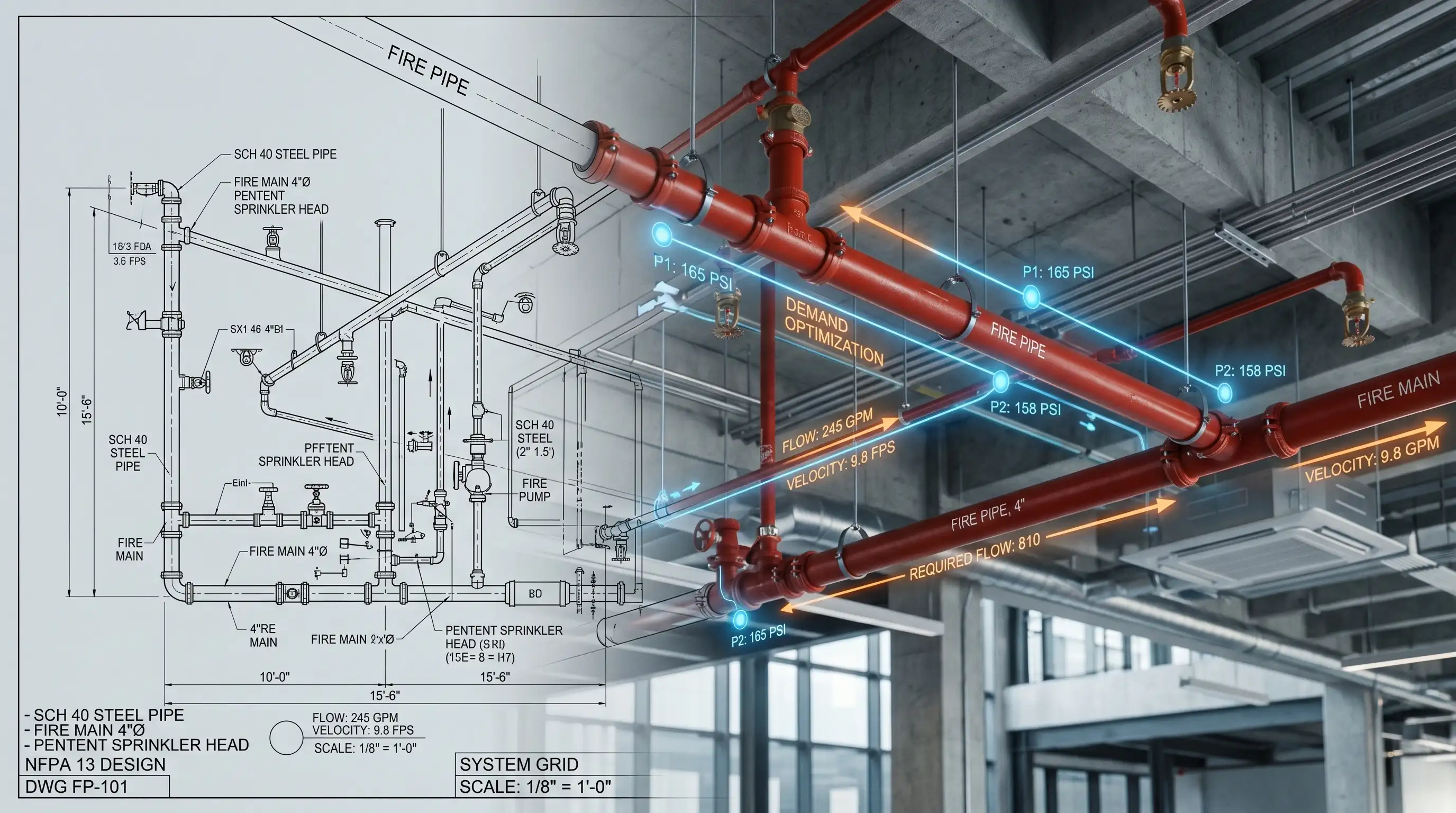
Fast, precise, and easy hydraulic calculations integrated into the NSVSoft ecosystem, validated by NFPA-certified engineers.
Quickly generate a complete material list in seconds with easy export to CSV.
Traditional sprinkler design often involves manual pipe sizing, repetitive drafting, time-consuming hydraulic calculations, manual NFPA rule checking, and coordination errors across multiple sheets.
NSVCad automates these processes directly inside AutoCAD, helping designers focus on engineering decisions instead of repetitive CAD operations.
Developed specifically for fire sprinkler professionals working with NFPA standards. Automate critical design checks including sprinkler spacing validation, obstruction and soffit rules, pipe network consistency, and coverage verification to improve project accuracy.
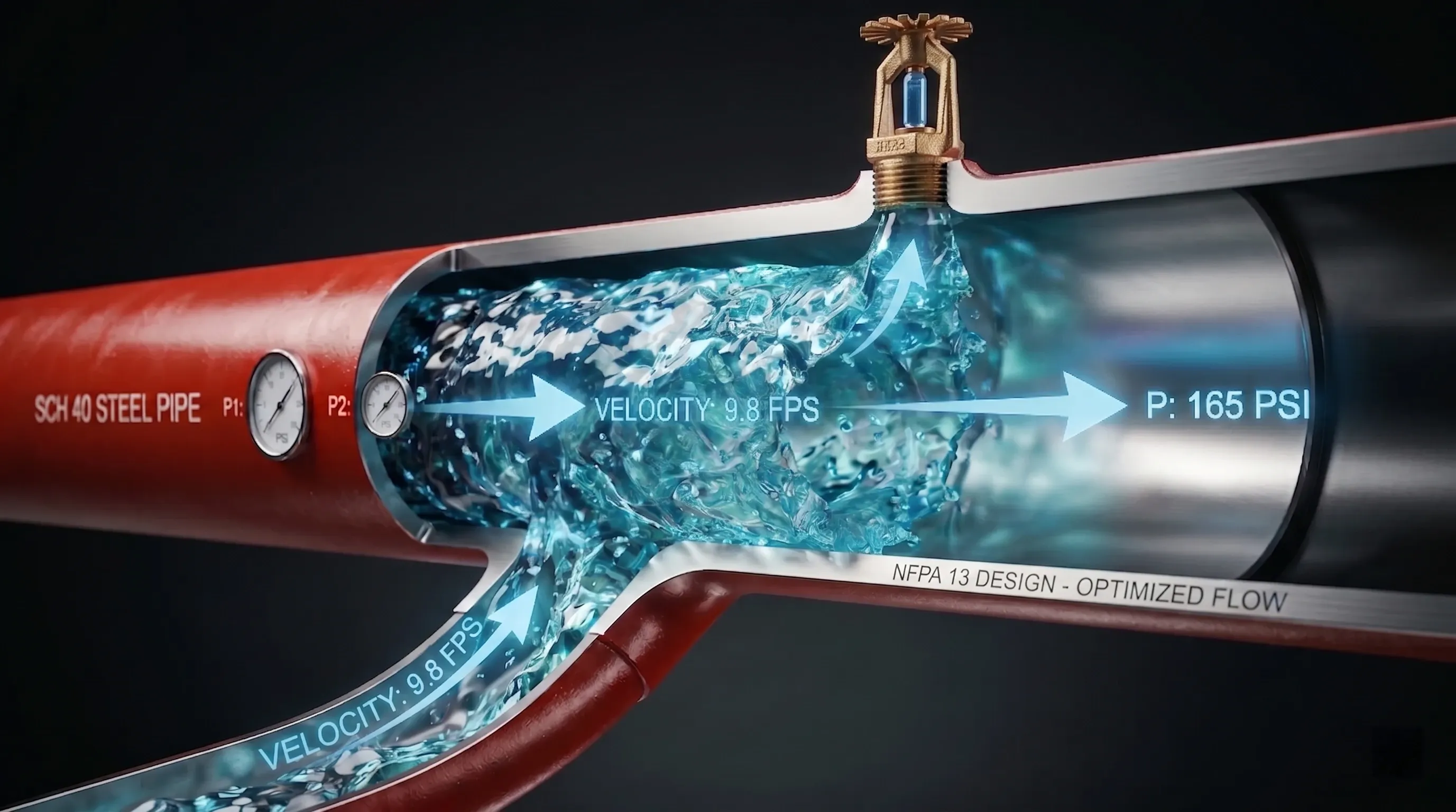
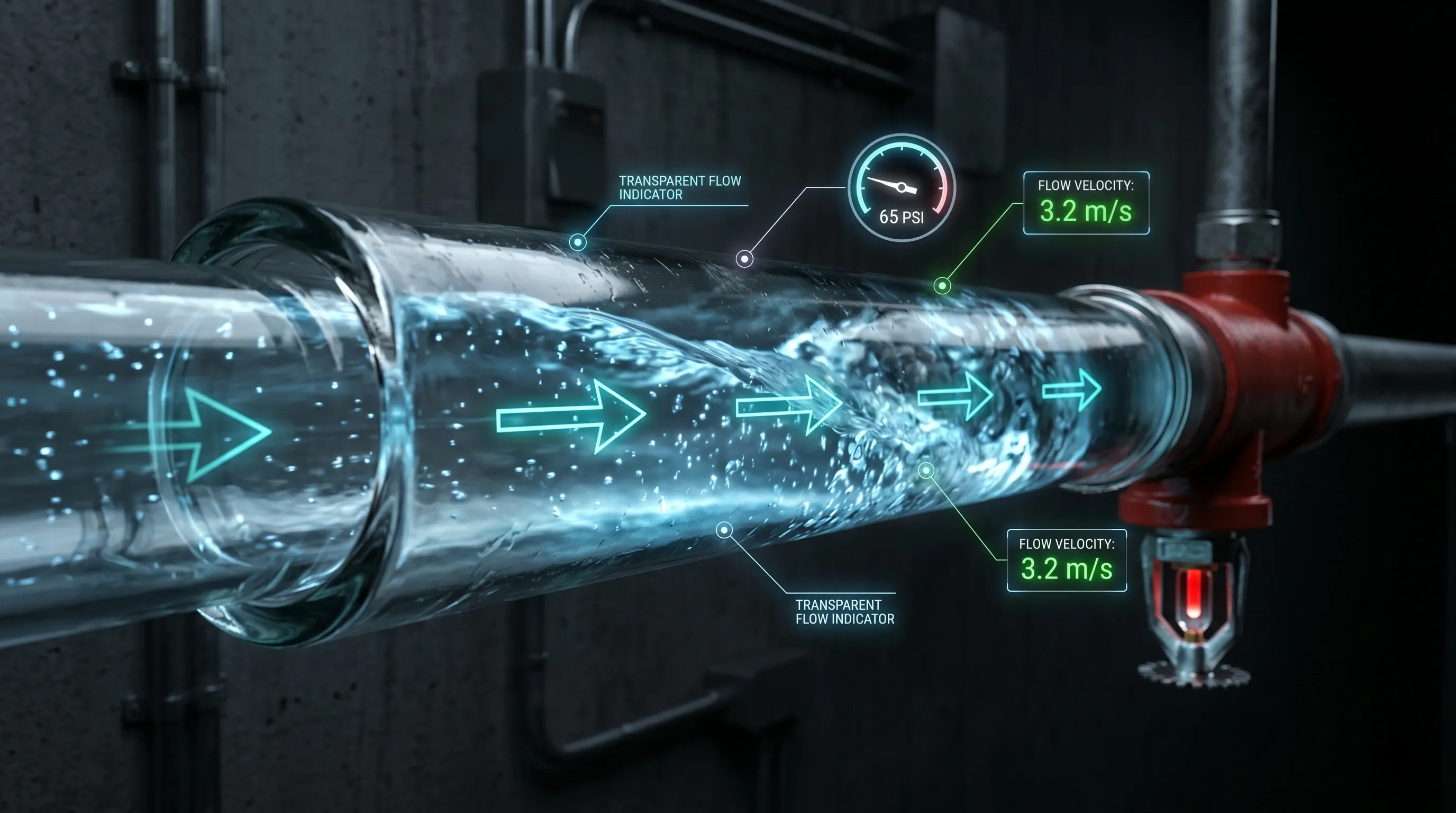
Simplify pipe sizing optimization, pressure loss calculations, and flow balancing. Evaluate system performance faster, implement demand reduction strategies, and perform remote area and water supply analysis without manual, repetitive adjustments.
Tailored specifically for sprinkler contractors, hydraulic designers, and engineering teams. Integrate directly into AutoCAD to continue working in a familiar environment, reduce training time, improve drafting speed, and automate repetitive tasks.
Identify design inconsistencies earlier in the workflow to improve calculation accuracy. Help prevent costly field revisions, delays during approval, hydraulic failures, pipe conflicts, and increased labor costs before installation begins.
Manage complex projects more efficiently by automating repetitive layout operations and coordinating seamlessly between branch lines, main piping, sprinkler placement, ceiling conditions, and multiple hazard classifications.
Instead of using separate tools, combine CAD drafting, hydraulic calculations, rule verification, and documentation into a more connected engineering process. Reduce duplicated work and simplify project redesigns from layout to analysis.
As projects become more complex, manual sprinkler drafting and calculation methods create bottlenecks in production. Engineering teams increasingly require:
Reduce project delivery time.
Eliminate manual calculation errors.
Automate repetitive CAD tasks.
Keep the whole team on the same page.
NSVCad helps teams modernize their sprinkler design process while remaining inside the AutoCAD environment they already use.
Discover our specialized tools designed to streamline your engineering workflows.
Comprehensive circuit calculations and battery sizing for fire alarms.
Accurate, fast, and productive tools for fire sprinkler safety analysis.
Automated International Building Code checks and allowable area limits.
Latest technical articles.
To design an NFPA 13 residential fire sprinkler system, evaluate manufacturer listings where coverage depends on hydraulic pressure. Plan layouts and pipe routing to optimize spacing. Apply the Soffit, Beam, and Ceiling Pocket rules to avoid excess heads and keep shadow zones under 1.4 m² (15 ft²).
Read More →
Learn the Sketch-Based Method for calculating fire sprinkler protection areas in irregular sprinkler layouts based on NFPA 13 requirements.
Read More →
Learn hydraulic concepts in fire sprinkler systems, including flow, pressure, and pipe friction loss explained in simple terms.
Read More →
Master fire sprinkler pipe sizing optimization, including velocity, friction loss, and hydraulic demand with full technical explanations.
Read More →
Master fire sprinkler pipe sizing optimization, including velocity, friction loss, and hydraulic demand with full technical explanations.
Read More →
Master fire sprinkler pipe sizing optimization, including velocity, friction loss, and hydraulic demand with full technical explanations.
Read More →
Learn how to reduce fire sprinkler system demand using pipe sizing, quick response sprinklers, and hydraulic optimization techniques.
Read More →