Part 3 — Case studies, demand comparison, design rules, cost-performance trade-offs, and engineering conclusions.
Full Case Studies: Pipe Sizing Impact on Hydraulic Demand
To understand real system behavior, pipe sizing must be evaluated using before-and-after case studies. These examples show how small design changes influence both total flow and required pressure.
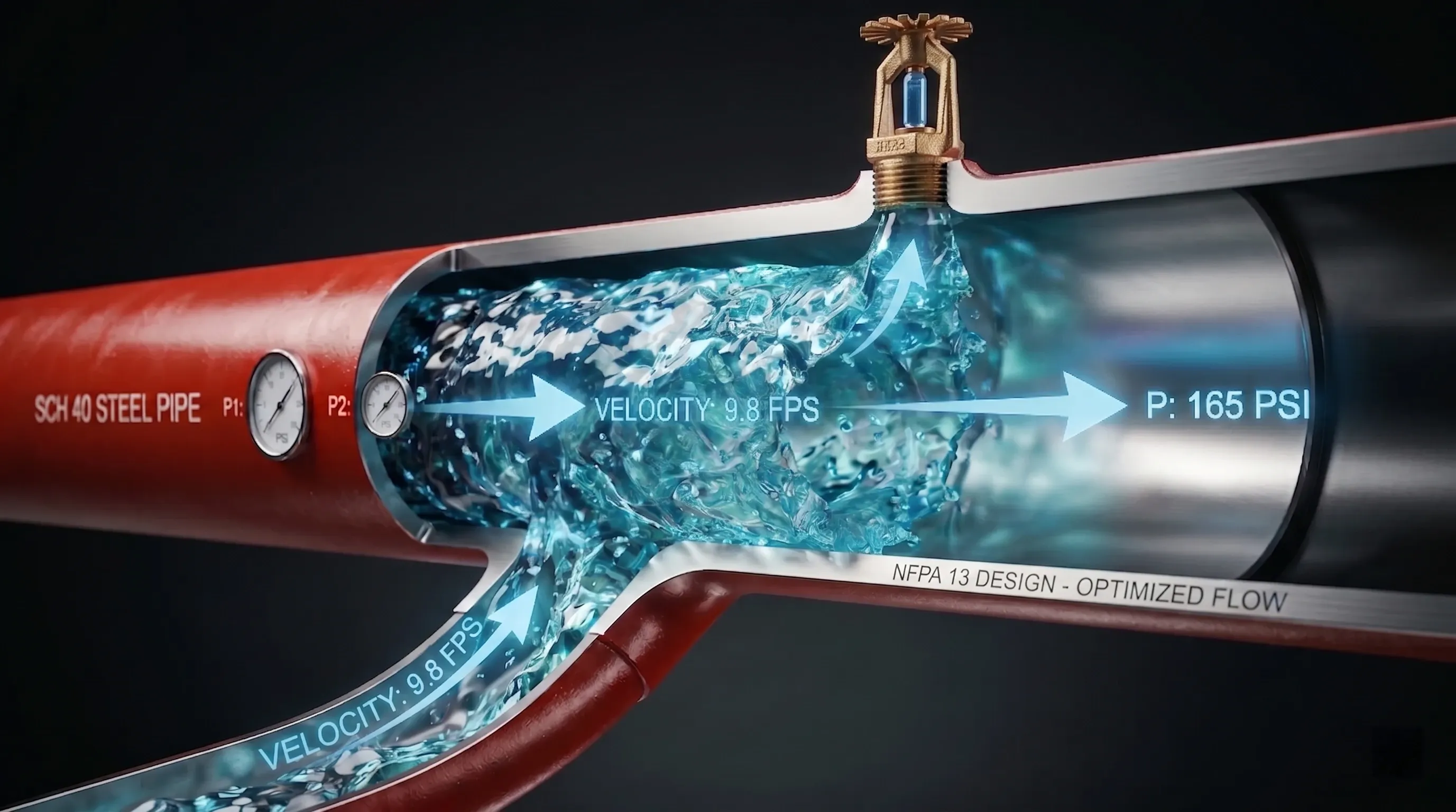
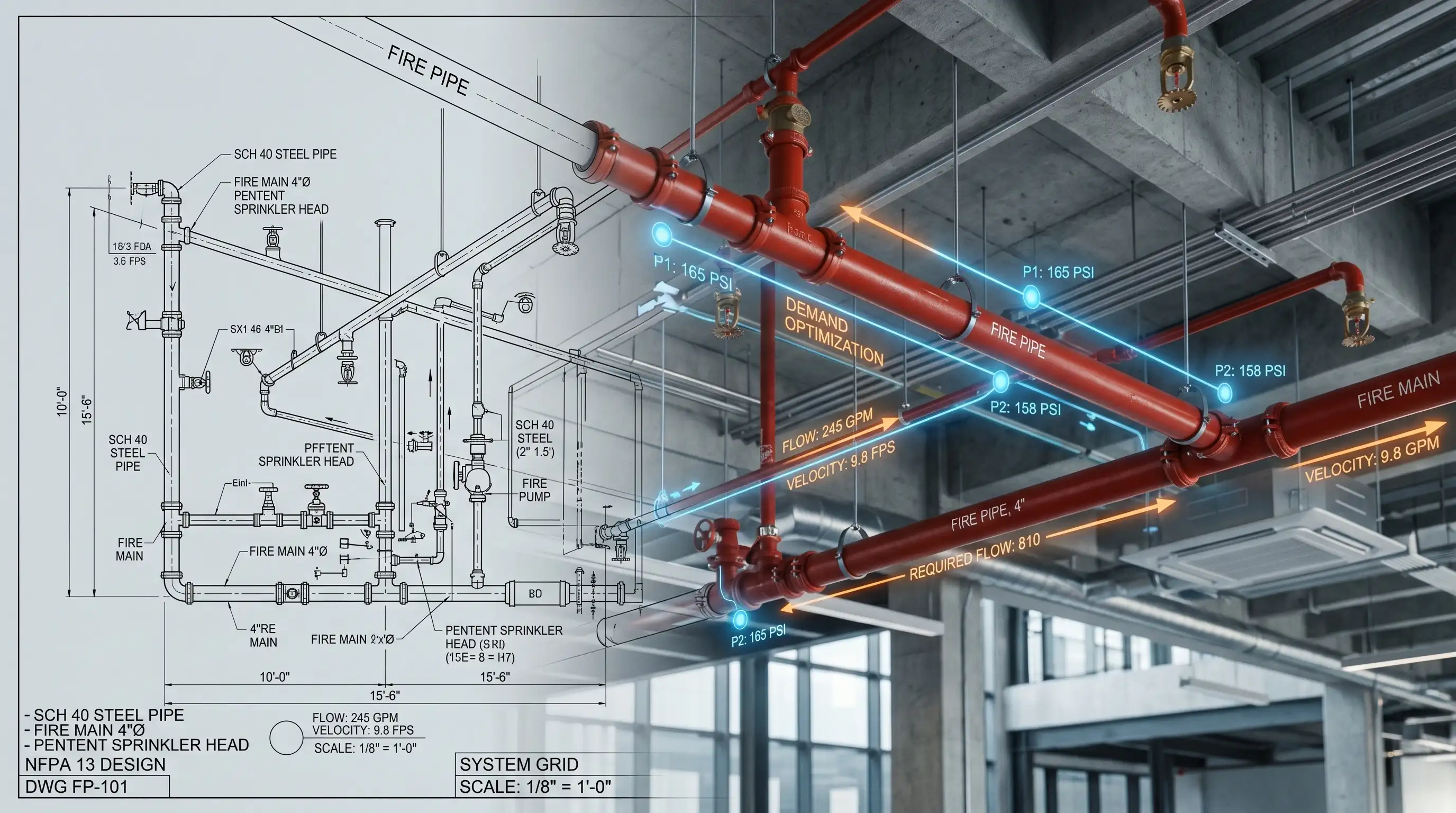
Baseline system: OH2 wet pipe system, density 0.20 gpm/ft², design area 1500 ft², K-factor 5.6, black steel pipe with C = 120, hose allowance 250 gpm, and baseline demand of 592 gpm at 77.4 psi.
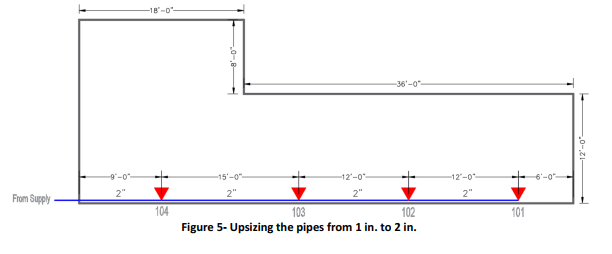
Case Study 1: Uniform Pipe Upsizing
Increasing pipe sizes throughout the system reduces friction loss and improves pressure distribution. However, it also raises pressure at upstream sprinklers and increases discharge from non-governing sprinklers. The result is often higher total flow and, in some cases, an increased pressure requirement.
Case Study 2: Selective Upsizing (Optimized Design)
In this approach, only high-loss sections such as long branch lines and remote areas are upsized. This reduces pressure loss where it matters most while limiting the increase in upstream sprinkler flow. The result is improved performance with lower pressure demand and stable or slightly reduced total flow.
Case Study 3: Selective Downsizing
Reducing pipe sizes in upstream sections increases friction loss, but it also lowers pressure at non-governing sprinklers and decreases their discharge. This reduces total system flow and can also lower main losses because the combined flow through the mains becomes smaller.
Case Study 4: Combined Strategy (Best Practice)
The best strategy combines upsizing in remote branch lines and high-friction segments with downsizing in upstream or low-friction sections. This reduces friction where critical while controlling excess flow elsewhere.
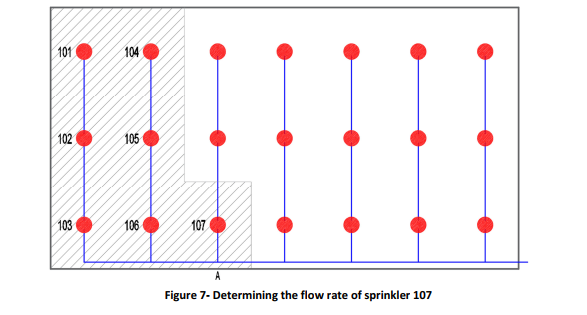
This combined method often produces lower total flow, lower pressure requirement, and the best overall hydraulic efficiency.
Before vs After Demand Comparison
The goal is not minimum friction, but minimum total demand.
Design Rules for Pipe Sizing Optimization
- Rule 1: Do not oversize everything.
- Rule 2: Focus on remote areas.
- Rule 3: Control upstream flow.
- Rule 4: Optimize, don’t maximize.
- Rule 5: Always recalculate.
Cost vs Performance Trade-Off
Design decisions must balance installation cost and hydraulic efficiency.
- Cost factors: pipe material cost, labor, pump size, and water storage requirements.
- Performance factors: pressure demand, flow demand, and fire control effectiveness.
- Key insight: the lowest-cost design is often the one with optimized hydraulic demand, not the largest pipe sizes.
Common Mistakes in Pipe Sizing
- Oversizing the entire system
- Ignoring flow redistribution
- Focusing only on friction loss
- Not using iterative hydraulic calculations
Final Engineering Insight
FAQ
What is the best pipe sizing strategy?
A combination of selective upsizing and downsizing.
Does reducing pipe size always help?
No. It must be applied strategically.
Why does uniform upsizing fail?
Because it increases flow in non-governing sprinklers.
What is the main goal of pipe sizing?
To minimize total system demand, not just friction loss.
How do engineers validate pipe sizing?
By performing full hydraulic recalculations after each change.


No comments yet. Be the first to share your thoughts!